
Strategies for business coaching are structured, goal-oriented frameworks that convert vague ambitions into measurable business outcomes. The most effective approaches combine a defined time frame, proven conversation models, and financial discipline to produce results solo entrepreneurs can track and repeat. Championbusinesscoaching works with Australian business owners across sectors using exactly this kind of structured, results-driven model, including a 90-day coaching guarantee that promises real outcomes or your session is free. The difference between coaching that sticks and coaching that fades comes down to three things: clear goals, consistent feedback, and a method tailored to your strengths.
1. Build your coaching strategy around a 90-day framework
A structured 90-day framework converts abstract goals into measurable outcomes, such as improving your EBIT margin by 7 points within 18 months. The first 90 days set the foundation: clarify your vision, define your key performance indicators, and assign clear accountability for each goal. Without this structure, coaching sessions drift into conversation without consequence.
The 90-day cycle sits inside a longer 3 to 5 year vision. Short-term plans feed the long-term direction, so every quarter builds on the last. This layered approach stops you from chasing tactics that feel urgent but don't move the needle on growth.

Structured objective frameworks like OKRs (Objectives and Key Results) translate your long-term vision into quarterly priorities and milestones. Regular reviews with ownership assigned to specific outcomes accelerate accountability. The review cadence, whether weekly or fortnightly, matters as much as the goals themselves.
Pro Tip: Set your 90-day KPIs in writing before your first coaching session. Verbal goals are easy to reinterpret. Written goals create a contract with yourself.
2. Use the GROW model to structure every coaching conversation
The GROW model structures coaching conversations into four stages: Goal, Reality, Options, and Will. Each stage serves a specific purpose. Goal defines what you want. Reality examines where you are now. Options explores what paths exist. Will tests your genuine commitment to act.
The model typically takes around 20 minutes per session and relies on open-ended questions rather than directives. This shift from advice to facilitation is what separates effective coaching from expensive consulting. You leave the session owning the decision, not just following instructions.
The Will stage is the most overlooked and the most critical. Coaches use a commitment score on a 1 to 10 scale to test whether a business owner will actually follow through. A score below 7 signals that the goal or the plan needs revision before the session ends. This single step prevents wasted weeks on half-committed actions.
- Goal: Define a specific, time-bound outcome, not a vague aspiration
- Reality: Assess current performance honestly, using data where possible
- Options: Generate at least three possible paths before choosing one
- Will: Score your commitment and identify what could block follow-through
Pro Tip: If your commitment score sits at 6 or below, revisit the Options stage. The right path usually raises commitment naturally.
3. Embed feedback loops to make behavioral change last
Coaching combined with explicit feedback loops and structured reflection is three to four times more effective at sustaining behavioral change than sporadic, unmeasured sessions. That gap is significant. It means the format of your coaching matters as much as the content.
Effective feedback loops pair critical questioning with job-embedded practice. You don't just discuss a behavior in a session. You practice it in your actual work, then bring the result back for review. This cycle of act, reflect, and adjust is what produces lasting change rather than temporary motivation.
Time horizons also matter. Shallow behavioral shifts, like changing how you open a sales call, may take 4 to 6 weeks to embed. Deeper changes, like how you make decisions under pressure, require 3 to 6 months of consistent reinforcement. Matching the feedback cadence to the depth of the change prevents frustration and dropout.
| Behavior type | Typical time to embed | Feedback cadence |
|---|---|---|
| Communication habits | 4–6 weeks | Weekly check-in |
| Decision-making patterns | 3–6 months | Fortnightly review |
| Leadership accountability | 6–12 months | Monthly deep review |
4. Adopt a strengths-based approach instead of a rigid system
A strengths-based coaching approach that adapts to your context produces more sustainable results than any rigid framework applied uniformly. Trust and psychological safety are prerequisites for this kind of coaching to work. Without them, business owners perform for their coach rather than growing for themselves.
Credentials alone do not guarantee coaching success. A coach who understands your industry, your personality, and your specific business pressures will outperform a credentialed generalist every time. The method must fit the person, not the other way around.
Effective coaches balance two roles: teacher and facilitator. When you need knowledge, they teach. When you need clarity, they ask questions. The question "What have you tried so far?" is one of the most powerful tools in a coach's kit. It shifts you from dependency to ownership of solutions, which is the entire point of good coaching.
- Adapt coaching style based on the owner's current knowledge and confidence level
- Build trust before challenging assumptions or pushing for difficult changes
- Use questions that promote self-discovery over advice that creates reliance
- Recognize that the goal is owner-led problem solving, not coach-led answers
5. Integrate leadership development as a core coaching pillar
Leadership capabilities set the ceiling for company performance. This is not a soft observation. It means that if you don't grow as a leader, your business will plateau regardless of your marketing spend or your team size. Leadership development belongs inside your coaching strategy, not alongside it.
Coaching that targets leadership behavior changes how you communicate, how you make decisions, and how you hold your team accountable. These shifts compound over time. A business owner who learns to delegate effectively in month three will see the downstream effects on team performance by month six.
Regular one-on-one coaching with active listening, open-ended questions, and feedback tied to specific behaviors builds leadership capacity over time. This is different from issuing directives. It builds people rather than managing tasks. For solo entrepreneurs scaling toward a team, this distinction is the difference between a business that grows and one that stalls at the owner's capacity.
Pro Tip: Track one leadership behavior per quarter. Measure it by asking your team for specific feedback, not general impressions.
6. Link coaching directly to financial metrics
Financial discipline is not a separate function from coaching. It is a core coaching pillar alongside leadership and operations. Metrics like Monthly Recurring Revenue (MRR), Customer Acquisition Cost (CAC), and EBIT margin connect your coaching conversations directly to profit. Without these numbers, coaching stays in the realm of intention.
Dashboards, budgeting reviews, and scenario planning sessions give your coaching a financial anchor. When you know your CAC is rising, your coach can help you diagnose whether the problem is a sales process issue, a pricing issue, or a positioning issue. That specificity is what makes coaching worth the investment.
The best business development coaching sessions end with a financial review alongside a behavioral one. You check whether your actions moved the numbers, not just whether you completed the tasks. This dual accountability, behavioral and financial, is what separates high-performing coaching engagements from feel-good check-ins.
7. Treat coaching effectiveness as a measurable outcome
Coaching effectiveness depends on trust, goal clarity, alignment on progress measurement, and a method tailored to the business owner's strengths. Missing any one of these fundamentals causes coaching efforts to stall. This means you need to evaluate your coaching relationship the same way you evaluate any business investment.
Set a review point at 30 days, 60 days, and 90 days. Ask whether the goals are still relevant, whether the method is working, and whether you are making progress you can measure. If the answer to any of these is no, adjust before the engagement runs its full course.
The best coaches act as thinking partners, asking tough questions that build your leadership capacity rather than providing quick fixes. That distinction matters for Australian entrepreneurs who need practical results, not motivational content. Coaching that produces a clear growth plan with measurable milestones is coaching worth paying for.
Key takeaways
Effective business coaching strategies combine a structured time frame, proven conversation models, continuous feedback, and financial accountability to produce measurable, lasting growth.
| Point | Details |
|---|---|
| Use a 90-day framework | Set written KPIs and accountability before your first session to create structure. |
| Apply the GROW model | Test commitment with a 1 to 10 score before ending any coaching conversation. |
| Embed feedback loops | Pair reflection with job-embedded practice to make behavioral change stick. |
| Match coaching to your strengths | A tailored, trust-based approach outperforms any rigid system applied uniformly. |
| Track financial metrics | Link every coaching goal to MRR, CAC, or EBIT margin to measure real impact. |
What I've learned after years of watching coaching succeed and fail
Most business owners come to coaching wanting answers. That's understandable. Running a business is hard, and the appeal of someone telling you exactly what to do is real. But the coaching engagements I've seen produce the most lasting results are the ones where the owner does the thinking, and the coach holds the space for that thinking to happen.
The 90-day framework is not just a planning tool. It's a psychological anchor. When you know the first 90 days have a defined structure, you stop second-guessing every decision and start executing. That shift in mental energy alone is worth the investment.
The GROW model surprised me the most. It looks simple on paper, and coaches sometimes dismiss it as too basic. In practice, the Will stage catches more failed plans than any other tool I've seen. A business owner who scores their commitment at 5 out of 10 is telling you something important. The plan isn't right yet.
Strengths-based coaching is where I'd push back hardest against conventional wisdom. The coaching industry often sells frameworks as the product. The real product is the relationship between coach and owner, built on trust and honest conversation. A coach who understands your specific context will always outperform one who applies a generic system, regardless of their credentials.
Financial tracking inside coaching sessions is still underused. Most owners treat their numbers as a separate conversation. The best coaching I've witnessed treats MRR and EBIT margin as primary inputs to every session, not afterthoughts. That's where the real accountability lives.
— Duncan
How Championbusinesscoaching puts these strategies to work
Championbusinesscoaching works with solo entrepreneurs and business owners across Australia using the exact frameworks covered here: structured 90-day plans, the GROW model, strengths-based facilitation, and financial KPI tracking built into every engagement.
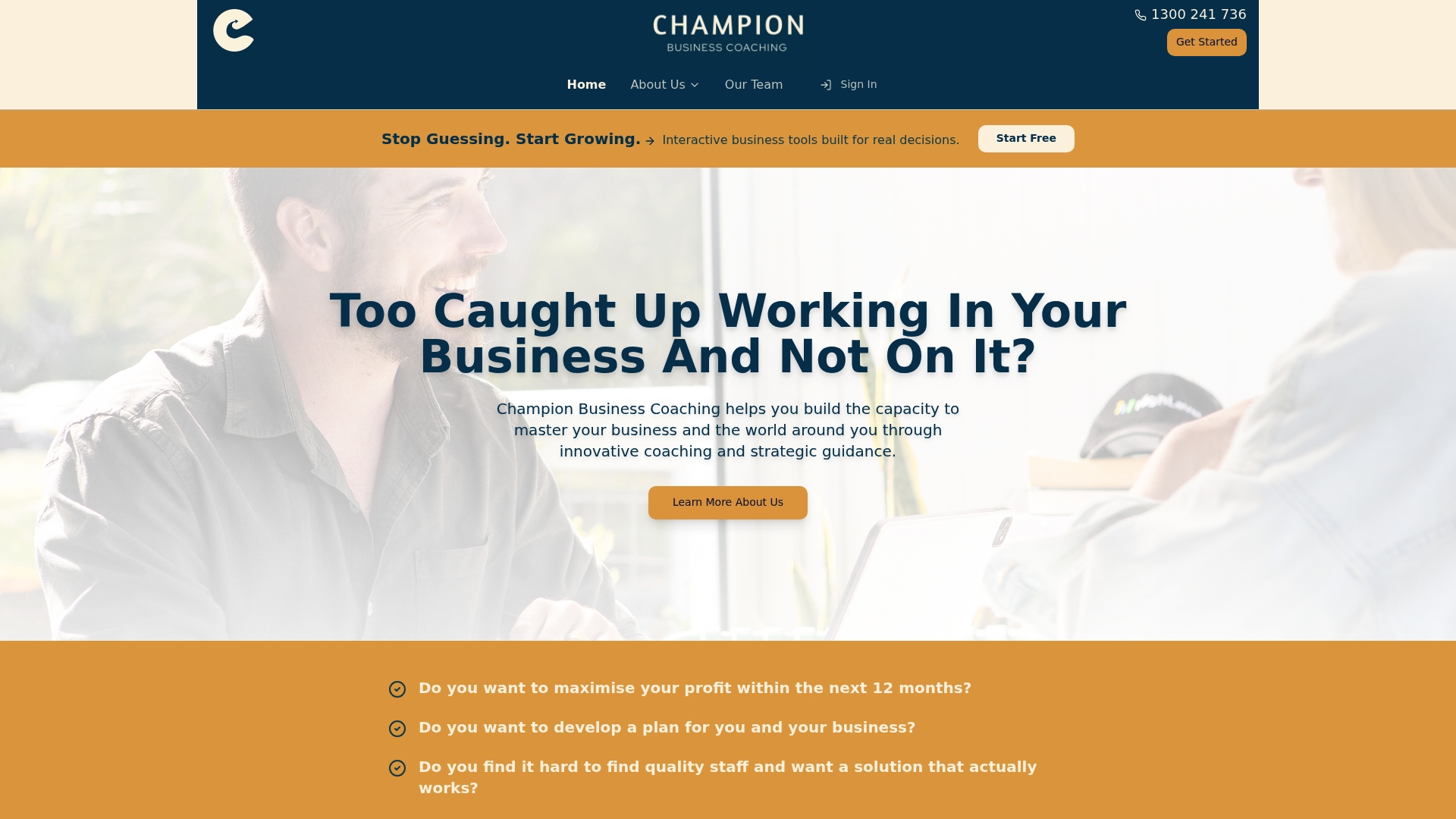
The firm limits coaching slots to maintain quality, which means every client gets a coach matched to their industry and growth stage. The 90-day coaching guarantee means you see measurable results or the session is free. That's a commitment most providers won't make. If you're ready to connect your goals to real numbers, explore tailored coaching plans or get started with business coaching in Australia today.
FAQ
What are the core strategies for business coaching?
The core strategies for business coaching include a structured 90-day framework, the GROW model for coaching conversations, continuous feedback loops, a strengths-based approach, and financial KPI tracking. Together, these methods convert goals into measurable business outcomes.
How does the GROW model work in practice?
The GROW model guides a coaching conversation through four stages: Goal, Reality, Options, and Will. The Will stage uses a commitment score on a 1 to 10 scale to confirm genuine buy-in before the session ends.
How often should coaching sessions happen for best results?
Session frequency depends on the depth of change targeted. Shallow behavioral shifts benefit from weekly check-ins, while deeper leadership development typically requires fortnightly or monthly sessions over 3 to 6 months.
Why does a strengths-based approach outperform rigid coaching systems?
A strengths-based approach adapts to the business owner's context, personality, and knowledge level, which builds trust and psychological safety. Coaching effectiveness depends on this foundation more than on any specific framework or credential.
What financial metrics should business coaching track?
Business coaching should track Monthly Recurring Revenue (MRR), Customer Acquisition Cost (CAC), and EBIT margin as primary indicators. Linking coaching goals directly to these numbers creates accountability that goes beyond task completion.