
A niche market is a focused segment of a broader market where a specific group of buyers has distinct needs, shared values, or a problem that mainstream providers largely ignore. The moment you stop selling to "everyone" and start solving one real problem for one defined group, your margins, your referrals, and your conversion rates tend to improve.
Here are fast examples that show the range:
- Eco-friendly pet food for urban dog owners
- Left-handed tools and stationery
- Post-partum recovery planners for working mothers
- NDIS-focused bookkeeping for registered providers
- Productivity software for Australian tradies
- Gourmet meal kits for people following a low-FODMAP diet
- Adaptive fashion for people living with physical disabilities
- Home-office fit-out packages for remote workers
The single biggest advantage of a niche strategy is that your customers find you, rather than you hunting them. When your offer matches a buyer's specific identity or problem, word-of-mouth does the heavy lifting — and that effect compounds faster in Australia's tight professional communities than in larger markets.
Niche market examples are most useful when they come with a buyer profile, a product idea, and a way to test demand locally. That is exactly what this article delivers.
Table of Contents
- What actually makes a market a niche?
- Why targeting a niche gives small businesses a real edge
- How to find and choose a niche that works in Australia
- 12 niche market examples built for the Australian context
- 1. NDIS-focused bookkeeping and compliance services
- 2. Productivity tools and coaching for Australian tradies
- 3. Eco-friendly pet food for urban Australian dog owners
- 4. Post-partum recovery services for working mothers
- 5. Remote-worker home-office fit-out packages
- 6. Sustainable event planning for corporate clients
- 7. Specialized travel for active Australian retirees
- 8. Adaptive fashion for Australians living with disabilities
- 9. Gourmet meal kits for specialized diets
- 10. Senior home fitness programs
- 11. Hobbyist 3D printing services and supplies
- 12. Financial coaching for mortgage brokers
- Common mistakes that kill niche businesses before they start
- How a coaching engagement helped an Australian service business validate its niche
- Key Takeaways
- The niche most entrepreneurs overlook is the one right in front of them
- Championbusinesscoaching helps you find, validate, and scale your niche
- Useful sources for further research
What actually makes a market a niche?
A niche market is a subset of a broader market defined by specific needs, preferences, or identities that mainstream providers either overlook or serve poorly. The key word is specific. "Pet owners" is a mass market. "Urban apartment dwellers who feed their dogs raw food" is a niche.
Five characteristics tell you whether you are looking at a genuine niche or just a vague segment:
- Distinct needs. Buyers want something the mass market does not offer. NDIS bookkeepers need compliance workflows that standard accounting software skips entirely.
- Specialized language. Niche buyers use terminology outsiders do not. Tradies talk about "variation orders" and "retention amounts" — a coach who speaks that language closes faster.
- Willingness to pay a premium. Because generic alternatives do not solve the problem well, niche buyers accept higher prices. A left-handed guitarist will pay more for a properly strung instrument than a right-handed player pays for a standard one.
- Concentrated channels. Niche buyers cluster in specific places: Facebook groups, industry associations, trade expos, or specialist subreddits. That concentration makes them cheap to reach.
- Repeat purchase behavior. Strong niches generate recurring revenue. A post-partum recovery service that works earns referrals to every new mother in the buyer's mothers' group.
Pro Tip: If you can describe your buyer in one sentence — including their specific problem, their budget, and where they hang out — you probably have a niche. If your description still sounds like a demographic ("women aged 25–45"), keep narrowing.
The intensity of the customer bond matters more than the raw size of the market. Some niches scale to significant dollar volumes precisely because they match a buyer's identity or values so tightly that switching feels like a betrayal.
Why targeting a niche gives small businesses a real edge
Niche strategy delivers better margins and faster customer acquisition for small businesses — not because the market is small, but because the fit is tight. When your offer is built for one specific buyer, every dollar of marketing spend works harder.
The concrete benefits:
- Pricing power. Specialists command higher fees than generalists. A financial coach who works exclusively with mortgage brokers can charge more than a generalist business coach because the perceived risk of hiring them is lower.
- Easier positioning. Your message writes itself when you know exactly who you are talking to. "Bookkeeping for NDIS providers" needs no explanation to its audience.
- Lower ad waste. Targeted Facebook or Google ads to a defined audience cost less per qualified lead than broad campaigns. Local SEO for a tightly defined service area compounds this further — local SEO for small businesses can be a cost-effective channel when your niche has geographic concentration.
- Stronger referrals. Niche buyers talk to each other. One satisfied NDIS provider refers three more because they all attend the same industry events.
The trade-offs are real and worth naming. Your initial total addressable market is smaller, which means early revenue takes longer to build. Over-reliance on a single channel (say, one Facebook group or one industry association) creates fragility. And some niches expire: a niche built around a regulatory loophole or a short-lived trend can disappear faster than you can pivot.
The Adobe Business blog frames this well using fitness as an example: Peloton did not compete in the general fitness equipment market. It carved out a specific niche of home-based, community-driven cycling — and that precision is what drove its early growth. The lesson for Australian small business owners is that niche thinking is not about being small. It is about being the obvious choice for a specific buyer.
How to find and choose a niche that works in Australia
The fastest path to a validated niche is matching your personal strengths to a measurable demand gap where competition is thin. That sentence sounds simple; the process behind it takes about two to four weeks of cheap testing.
Step 1: Map your skills and constraints. List what you already know, who you already serve, and what problems you solve faster than most. A former NDIS support coordinator who starts a consulting business already has the language, the network, and the credibility.
Step 2: List your existing customers and their problems. Your current or past clients are your first research pool. What do they complain about? What do they pay for that nobody else offers them?
Step 3: Mine local demand data. In Australia, the Australian Bureau of Statistics publishes industry and demographic data that can confirm whether a niche has enough buyers. Google Trends, Google's Keyword Planner, and Facebook Audience Insights all show search and interest volume. State-based business directories and industry association membership numbers give you a rough ceiling on market size.
Step 4: Find supply gaps. Search for your niche on Gumtree, local Facebook groups, and industry-specific forums. Count the active competing offers. If you find fewer than five credible providers serving a clearly defined buyer group, that is a signal worth testing.
Step 5: Build a minimum viable offer. Do not build a product. Build a promise. A one-page PDF, a 30-minute consultation, or a simple landing page with a clear headline and a contact form is enough to test whether people will raise their hand.
Step 6: Run low-cost tests. A $50–$100 Facebook or Google ad pointing to a landing page tells you whether your niche has real demand within days. Measure click-through rate and the number of people who submit their email or book a call. Shopify's niche market guide recommends this kind of early validation before committing to inventory or a full service build-out.
Australian channels worth using:
- Industry Facebook groups (tradies, NDIS providers, small business owners)
- Gumtree and local marketplace listings
- State-based business directories (e.g., Business Victoria, Business Queensland)
- Industry associations and trade expos (Master Builders, NDIS provider networks, AHA)
- Local community groups and neighbourhood apps
Pro Tip: Interview five people who would be your ideal paying customers before you build anything. Ask what they currently use, what frustrates them about it, and what they would pay to fix it. Those five conversations are worth more than any keyword tool.
12 niche market examples built for the Australian context
Each example below includes a buyer description, product or service ideas, and a one-line Australian validation tip. These are starting points, not blueprints — adapt them to your skills and your market.
1. NDIS-focused bookkeeping and compliance services
NDIS registered providers face compliance requirements that standard bookkeeping software and generalist accountants handle poorly. The NDIS price guide, plan management rules, and audit requirements create a genuine workflow problem that a specialist can solve.
Service ideas: NDIS-compliant chart of accounts setup, monthly compliance reporting, plan management reconciliation, staff timesheet auditing. Who it serves: Registered NDIS providers, support coordinators, and plan managers. AU validation tip: Search Facebook groups for NDIS providers and count how many posts ask bookkeeping or compliance questions. If the volume is high and answers are thin, the gap is real. Championbusinesscoaching offers NDIS-specific coaching for providers navigating exactly this space.
2. Productivity tools and coaching for Australian tradies
Tradies lose hours every week to quoting, invoicing, and chasing payments. A service or software bundle that cuts that admin time by even two hours a week has an obvious value proposition.
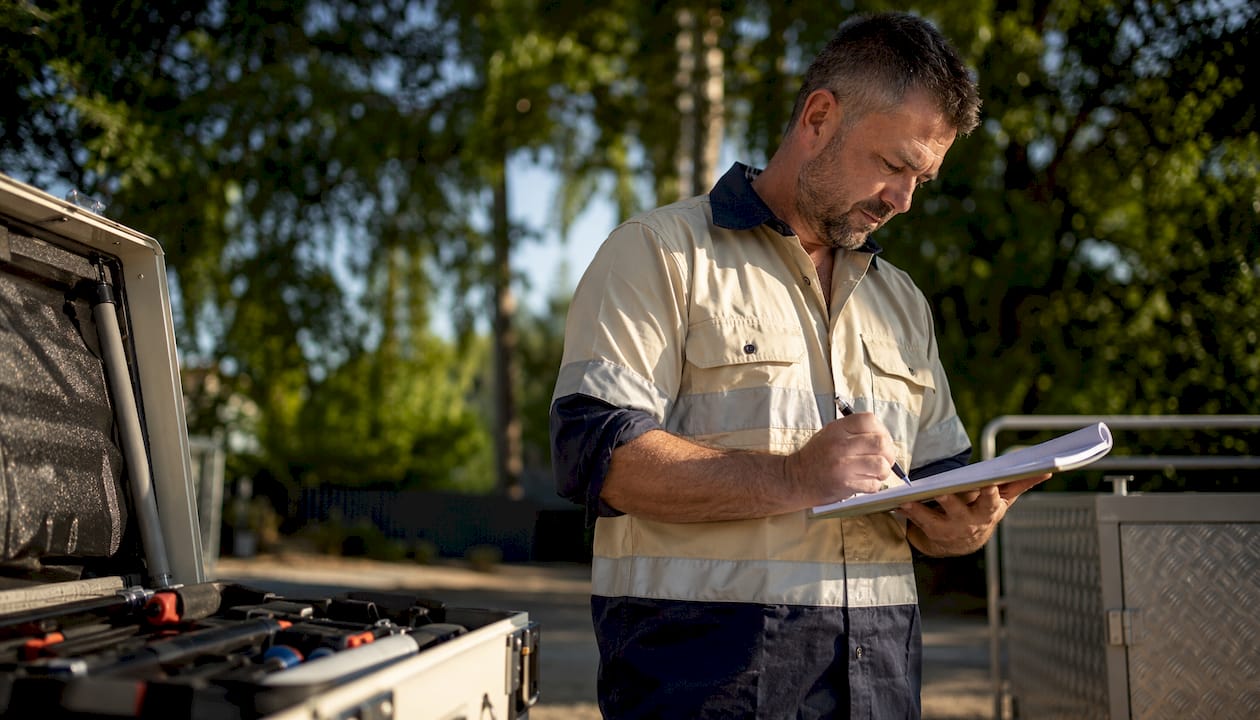
Service ideas: Job management software setup and training, quoting template libraries, cash flow coaching, compliance document bundles. Who it serves: Sole-trader and small-team electricians, plumbers, builders, and landscapers. AU validation tip: Post a simple question in a tradie Facebook group asking what admin task costs them the most time. The answers will tell you exactly what to build. Championbusinesscoaching's trade services coaching addresses this directly.
3. Eco-friendly pet food for urban Australian dog owners
Australian pet owners are part of a large and growing market for pet products, reflecting a strong appetite for pet care and related services. Urban dog owners in Sydney and Melbourne are increasingly interested in sustainable, locally sourced pet food with transparent ingredient lists.

Product ideas: Subscription raw food boxes, air-dried single-protein treats, compostable packaging pet food, locally farmed kangaroo or emu-based products. Who it serves: Urban apartment dwellers aged 25–45 who treat their pets as family members. AU validation tip: Check Instagram hashtags like #australianpetfood and #rawfeddogs for engagement volume. A small batch pre-order campaign on a simple landing page will confirm whether buyers will pay before you invest in production.
4. Post-partum recovery services for working mothers
Returning to work after having a baby involves physical recovery, mental load management, and career re-entry — three problems that rarely get addressed together. A service that bundles these for professional women fills a gap that neither general health providers nor career coaches typically cover.
Service ideas: Post-partum physiotherapy packages, return-to-work coaching, pelvic floor fitness programs, flexible online recovery plans designed around work schedules. Who it serves: Professional women returning to full-time or part-time work within 12 months of giving birth. AU validation tip: Search for "return to work after baby" in Australian mothers' Facebook groups. High engagement with no clear commercial answer is your green light.
5. Remote-worker home-office fit-out packages
Australia's shift to hybrid and remote work created a buyer who needs ergonomic furniture, reliable tech, and a professional-looking background — but does not want to research and source each item separately. A bundled package removes that friction.
Product/service ideas: Curated ergonomic desk-and-chair bundles, lighting and webcam packages, acoustic panels, virtual office setup consultations. Who it serves: Employees and freelancers working from home three or more days per week. AU validation tip: Run a $50 Google ad targeting "home office setup Australia" and measure how many people click through to a simple product bundle page. Cost-per-click in this category is relatively low.
6. Sustainable event planning for corporate clients
Australian businesses face growing pressure from stakeholders to reduce the environmental footprint of their events. A planner who specializes in zero-waste catering, carbon-offset travel, and compostable materials solves a problem that general event planners cannot credibly claim to own.
Service ideas: Zero-waste catering coordination, carbon-offset event packages, sustainable venue sourcing, post-event waste audits. Who it serves: Mid-size Australian companies with ESG commitments and annual conference budgets. AU validation tip: Check LinkedIn for "sustainable events Australia" and look at how many corporate sustainability managers are posting about the challenge. A direct outreach campaign to 20 sustainability managers costs nothing but time.
7. Specialized travel for active Australian retirees
Australians aged 60 and over are one of the fastest-growing travel segments, and many want adventure travel — hiking, cycling, cultural immersion — not cruise-ship packages. A travel service built around their pace, health considerations, and interests has very little direct competition.
Service ideas: Small-group walking tours, cycling holidays in regional Australia or New Zealand, cultural immersion trips with medical support, slow-travel itineraries. Who it serves: Australians aged 60–75 who are physically active and want more than a resort holiday. AU validation tip: Search for active travel groups on Facebook targeting Australian retirees. Engagement levels and the absence of commercial sponsors in those groups signal an underserved buyer.
8. Adaptive fashion for Australians living with disabilities
Standard clothing is designed for standard bodies. People using wheelchairs, prosthetics, or living with conditions that affect dexterity face real daily friction getting dressed. Adaptive fashion solves a functional problem that mainstream retailers ignore.
Product ideas: Magnetic-closure shirts, seated-fit trousers, easy-grip footwear, sensory-friendly fabrics. Who it serves: Australians living with physical disabilities, NDIS participants, and their carers. AU validation tip: Post in NDIS participant Facebook groups asking what clothing frustrations people face. The NDIS also funds some clothing-related supports, which means buyers may already have a funding pathway.
9. Gourmet meal kits for specialized diets
Low-FODMAP, AIP (Autoimmune Protocol), and carnivore diets all have dedicated communities in Australia who struggle to find meal kits that match their requirements. General meal kit services do not serve them well.
Product ideas: Weekly low-FODMAP meal kit subscriptions, AIP-compliant recipe boxes, carnivore-diet protein packs, dietitian-designed specialty meal plans. Who it serves: Australians managing IBS, autoimmune conditions, or following medically recommended elimination diets. AU validation tip: Search Reddit's r/AustraliaDiet and dedicated Facebook groups for these diets. Count how often members ask for meal kit recommendations and get no satisfying answer.
10. Senior home fitness programs
Older Australians who want to stay active face a real barrier: gym environments feel intimidating, and generic YouTube fitness content does not account for balance issues, joint limitations, or fall prevention. A home-based program designed specifically for this group addresses all three.
Service ideas: Online chair yoga subscriptions, fall-prevention exercise programs, strength training for over-65s, in-home personal training packages. Who it serves: Australians aged 65 and over living independently at home. AU validation tip: Contact local GP clinics and ask whether they refer patients to exercise programs. GPs are a powerful referral channel in this niche, and a single GP partnership can fill a program quickly.
11. Hobbyist 3D printing services and supplies
The 3D printing hobbyist community in Australia is active but underserved by local suppliers. Most enthusiasts import filament and parts from overseas, which means slow delivery and high shipping costs. A local supplier with fast turnaround and community support has a structural advantage.
Product/service ideas: Specialty filament subscriptions, custom print-on-demand services, beginner starter kits, online troubleshooting support memberships. Who it serves: Hobbyists, makers, and small-scale product designers who use desktop 3D printers. AU validation tip: The Australian 3D printing Facebook groups and forums like Whirlpool have active communities. A simple survey posted there will tell you what buyers want and what they currently pay for it.
12. Financial coaching for mortgage brokers
Mortgage brokers run small businesses with lumpy income, high compliance costs, and limited time for financial planning. A coach who understands the aggregator model, trail commissions, and ASIC licensing requirements can charge a premium that a generalist financial coach cannot justify.
Service ideas: Cash flow planning for commission-based income, business structure advice, compliance cost management, team hiring frameworks. Who it serves: Self-employed mortgage brokers and small brokerage owners across Australia. AU validation tip: The MFAA and FBAA both run events and online communities. A short presentation at a local chapter meeting is a low-cost way to test whether the niche responds to your offer.
Common mistakes that kill niche businesses before they start
Most niche business failures trace back to one of two problems: the niche is so narrow that there are not enough buyers, or the demand looked real but nobody was actually willing to pay. Both are avoidable with honest early testing.
Common pitfalls to watch for:
- Confusing search volume with demand. High Google search volume means people are curious, not that they will pay. Measure competitor shelf (how many active, paid offers exist) and buyer behavior, not just clicks.
- Ignoring customer language. If your marketing copy uses words your buyers do not use, they will not recognize themselves in your offer. Read their forum posts, their Facebook group questions, their reviews of competitors. Use their exact words.
- Solving a problem nobody pays for. Some problems are real but not urgent enough to spend money on. If your five discovery interviews produce zero people willing to pay even a small amount, the niche needs rethinking.
- Over-reliance on one channel. A business built entirely on one Facebook group, one referral partner, or one platform is fragile. Build at least two acquisition channels before you scale.
- Regulatory blind spots. In Australia, some niches carry compliance requirements that can catch new entrants off guard. NDIS providers must meet NDIS Quality and Safeguards Commission standards. Food businesses face labeling requirements under Food Standards Australia New Zealand (FSANZ). Products marketed for therapeutic use must comply with TGA regulations. One-sentence rule: check the relevant regulator's website before you launch, not after.
The niche that looks too small from the outside often looks completely different once you are inside it. A tight community of buyers who trust you and refer their peers can generate more revenue than a broad market where you are invisible.
When to scale out of a niche:
Scale when you see consistent repeat purchases, a decreasing cost to acquire each new customer, and profitable customer cohorts over at least two or three months. Safe expansion paths include adjacent niches (e.g., from NDIS bookkeeping to disability sector HR), product-line extensions (adding a course to a service), or geographic expansion within Australia. Scaling before those signals appear usually means diluting what made the niche work in the first place.
How a coaching engagement helped an Australian service business validate its niche
A service-based business owner in Australia came to Championbusinesscoaching with a broad offer: general business consulting for "small businesses." The problem was not the quality of the work. It was that the positioning attracted nobody in particular and converted poorly.
The coaching engagement focused on three things: clarifying the buyer, sharpening the offer, and running a low-cost validation test before changing anything else. Using Championbusinesscoaching's customer avatar guide, the owner mapped out two distinct buyer profiles from their existing client base. One profile, NDIS-registered providers struggling with compliance documentation, showed up repeatedly in their best and most profitable client relationships.
Within eight weeks of narrowing the positioning to NDIS compliance consulting, the business owner reported that inbound inquiries became more qualified, sales conversations were shorter, and the close rate on proposals improved noticeably. The offer had not changed. The audience had.
The cash flow forecasting tool helped the owner model what a 20-client niche practice would generate compared to the previous broad approach, which made the decision to commit to the niche much easier to justify. The 90-day coaching guarantee meant there was no risk in testing the new positioning quickly rather than deliberating for months.
This pattern, narrow first, validate fast, then scale, is what separates businesses that find their niche from those that stay stuck in the middle.
Key Takeaways
Niche markets succeed when a specific buyer's problem is matched with a precisely positioned offer, tested cheaply before full commitment, and grown through the concentrated channels where that buyer already spends time.
| Point | Details |
|---|---|
| Definition matters | A niche is defined by distinct buyer needs and willingness to pay a premium, not just by market size. |
| Test before you build | A simple landing page or $50–$100 ad test reveals real demand faster than months of planning. |
| Use Australian channels | Facebook groups, industry associations, Gumtree, and state directories are your cheapest validation tools. |
| Watch for compliance | NDIS, FSANZ, and TGA rules apply to specific niches; check the relevant regulator before launching. |
| Championbusinesscoaching | Provides niche validation coaching, customer avatar tools, and a 90-day guarantee for Australian businesses. |
The niche most entrepreneurs overlook is the one right in front of them
Most business owners I work with already have a niche. They just have not named it yet. Their three best clients share an industry, a problem, or a workflow — and the owner is still writing marketing copy for everyone.
The Australian market rewards specificity faster than most entrepreneurs expect. Our professional communities are tight. A mortgage broker who hears that a coach "works specifically with mortgage brokers" will tell every broker they know. That referral loop does not happen when your positioning is "business coaching for small businesses."
My practical rule: look at your last five clients who paid without negotiating and came back for more. What do they have in common? That overlap is your niche. Stop trying to invent one from scratch when the data is already sitting in your CRM.
The other thing worth saying: do not wait until the niche is perfect before you test it. A rough offer to the right audience beats a polished offer to the wrong one every time.
Championbusinesscoaching helps you find, validate, and scale your niche
Fewer than a handful of coaching firms in Australia combine niche validation frameworks with AI-powered business tools and a genuine performance guarantee. Championbusinesscoaching does exactly that, with coaching packages built specifically for Australian entrepreneurs who want to stop guessing and start growing.
The coaching process covers customer avatar development, offer positioning, low-cost validation testing, and cash flow modeling — all the steps this article outlines, done with a coach who has worked across NDIS, trades, mortgage broking, and food and beverage businesses. Coaching slots are limited to keep the engagement quality high, and every engagement comes with a 90-day guarantee: results or your session is free.
If you are ready to define your niche and build a business around it, book a free consultation and find out whether there is a slot available for your business.
Useful sources for further research
These sources are recommended for Australian entrepreneurs who want to go deeper on market sizing, niche ideas, and validation methods.
| Source | Best for | Link |
|---|---|---|
| Australian Bureau of Statistics | Market size data, demographic research, industry breakdowns | abs.gov.au |
| Shopify Niche Market Guide | Niche definitions, examples, and validation steps | shopify.com/blog/niche-markets |
| Adobe Business Blog (AU) | Benefits of niche strategy, category-level examples | business.adobe.com/au |
| Gelato Profitable Niche Examples | 2026-oriented niche category list and rationale | gelato.com/blog |
| Championbusinesscoaching eBooks | Customer avatar guide, validation checklists, business tools | championbusinesscoaching.com.au/ebooks |
| Hyphenate Consulting (Local SEO) | Affordable SEO for niche local audiences | hyphenateconsulting.com |
| Championbusinesscoaching Blog | Marketing strategy for Australian SMBs | blog.championbusinesscoaching.com.au |