
A business networking strategy only works if it is a targeted, give-first system: pick two or three channels, build 10 to 20 high-trust relationships, and follow up within 24 to 48 hours of every meeting. Skip the collection of business cards entirely. Start this week with a short target list and personalized follow-up messages to whoever you meet next.
TL;DR:
- Focusing on 10 to 20 high-trust relationships and following up within 24 to 48 hours yields better results than broad networking efforts.
- Testing new channels for 90 days and tracking conversations, warm introductions, and booked meetings helps identify the most effective platforms.
- Deep relationships require tailored touchpoints; core contacts should be contacted monthly, while others need less frequent engagement.
- Building strategic partnerships involves clear goals, early pilot testing, trust, stakeholder coordination, and avoiding rushing formal agreements.
- Consistent tracking and coaching support are essential to turning networking efforts into referrals and partnerships over six to 12 months.
Table of Contents
- What is the most effective business networking strategy?
- How do you know which networking channels actually work?
- How do you build deep, high-trust professional relationships?
- Turning networking contacts into referrals and partnerships
- What should you track to measure networking ROI?
- How coaching helps you actually run this system
- What most business owners get wrong about networking
- Ready to put a real networking system in place?
- Sources
What is the most effective business networking strategy?
The strategy that actually produces referrals and partnerships treats networking as a system, not a headcount. A small set of high-trust relationships compounds over time far more reliably than a broad list of acquaintances you barely remember meeting. That means fewer contacts, deeper relationships, and a repeatable follow-up rhythm rather than sporadic effort whenever you happen to attend an event.
Here is where to put your energy first:
- Build a target list. Choose 10 to 20 people whose businesses, roles, or networks genuinely intersect with yours, and write down a specific ask for each one before you ever reach out.
- Lead with giving. Send a resource, make an introduction, or share someone's content before you ask for anything. This "give-first" approach is the strongest predictor of long-term, high-value professional relationships, according to Forbes reporting on relationship-building in the AI era.
- Show up where it counts. Curated events beat large conferences for access to decision-makers, and volunteering to help organizers or speakers gets you into rooms you could not otherwise enter.
- Run a content-to-DM sequence. Post something useful on LinkedIn, engage with the people who respond, then move the best conversations to direct messages and calls.
- Join one structured community. A niche Slack or Discord group filled with your ideal referral partners beats ten generic networking breakfasts.
A few give-first scripts worth stealing:
- "I saw you're hiring for X, I know someone great, want an intro?"
- "Read your post on Y, thought this case study might help."
- "No ask here, just wanted to connect you two."
If you only have bandwidth for three tactics, start with the target list, one curated event or community, and a disciplined follow-up habit. Everything else compounds from those three.
How do you know which networking channels actually work?
Not every room is worth your time, and most owners waste months in the wrong one. Run a simple test before committing:
- Signal-to-noise ratio. Are the people in the room actually your buyers, referral partners, or peers, or is it mostly other vendors chasing the same leads?
- Proximity to decision-makers. Can you reach the person who signs off, or are you three introductions away?
- Repeatability. Will this event, group, or platform still exist and still be relevant in six months?
- Cost versus return. Weigh membership fees, travel, and time against what a single good introduction is worth to your business.
Give any new channel 90 days before judging it, and track three numbers along the way: conversations that actually advance to a next step, warm introductions you receive, and meetings booked. Small curated events tend to beat large conferences for decision-maker access. Niche online communities beat generic ones. Podcast guesting works well if your buyers listen to shows in your category. Consistent LinkedIn content works if your audience actually scrolls there. Business Queensland's networking guidance is a solid starting point for mapping industry groups and events worth testing, and Business can help you find local options to trial.
Pro Tip: Track your 90-day test in a simple spreadsheet with one row per channel. If a channel hasn't produced a single advancing conversation by day 60, cut it and reallocate that time.
How do you build deep, high-trust professional relationships?
Not every contact deserves the same attention, and treating them all equally is how good relationships go cold. A three-tier model and CRM-driven cadence converts far more introductions into real outcomes than random, ad-hoc follow-up ever does.
- Core relationships (10 to 20 people): your closest referral partners and collaborators. Touch base monthly, no exceptions.
- Active relationships (50 to 100 people): people worth nurturing but not daily contact. A quarterly check-in keeps the relationship warm.
- Ambient relationships (100+): everyone else in your orbit. A LinkedIn comment or occasional share is enough.
The cadence matters more than the content. Follow up within 24 to 48 hours of any first meeting with something specific you discussed. A week later, send one piece of value with no ask attached. Asking for advice, rather than a favor, deepens a relationship faster because it invites the other person to invest in you.
Pro Tip: A short "thinking of you" message with a relevant article attached does more for a core relationship than a generic "let's catch up soon" ever will.
Turning networking contacts into referrals and partnerships
A referral relationship is casual: someone sends you business because they trust your work, with no formal agreement behind it. A strategic partnership is deliberate: two businesses coordinate on offers, audiences, or delivery in a way that requires real alignment. Getting from one to the other follows a fairly predictable path, according to research on negotiating enduring strategic partnerships:
- Get strategic clarity first. Know exactly what you want from the partnership before you propose anything.
- Test alignment early. A small pilot project reveals more than three meetings of talking about vision.
- Establish trust before scale. Deliver on a small commitment before asking for a bigger one.
- Coordinate stakeholders. Make sure the people who need to say yes on both sides are actually in the conversation.
- Control the pace. Rushing a partnership agreement usually produces a weak one.
A simple pilot ask like "let's refer three clients to each other this quarter and compare notes" tells you more than a signed agreement ever will. Save contracts and legal review for arrangements involving shared revenue, co-branding, or client data. Champion Business Coaching's approach to structured coaching often includes exactly this kind of staged partnership planning with clients.
What should you track to measure networking ROI?
You do not need enterprise software to run this system well. A spreadsheet or a basic CRM with four fields does the job: last contact date, next action, relationship tier, and how you originally met.
Track three numbers every quarter:
- Referrals received from your network
- Meetings booked that originated from a networking contact
- Revenue attributed to network-origin leads
Set a reminder for follow-ups, save your give-first scripts as templates, and review the numbers once a quarter, not once a year. Structured referral motions and pre-written introduction templates generate a meaningful share of pipeline for businesses that run them consistently rather than sporadically, and AI tools can speed up the research behind personalization without replacing the relationship work itself.
Expect the payoff to be back-loaded. Short-term testing tells you whether a channel is worth your time, but the real compounding effect of a networking system shows up over six to 12 months, not in the first few weeks.
How coaching helps you actually run this system
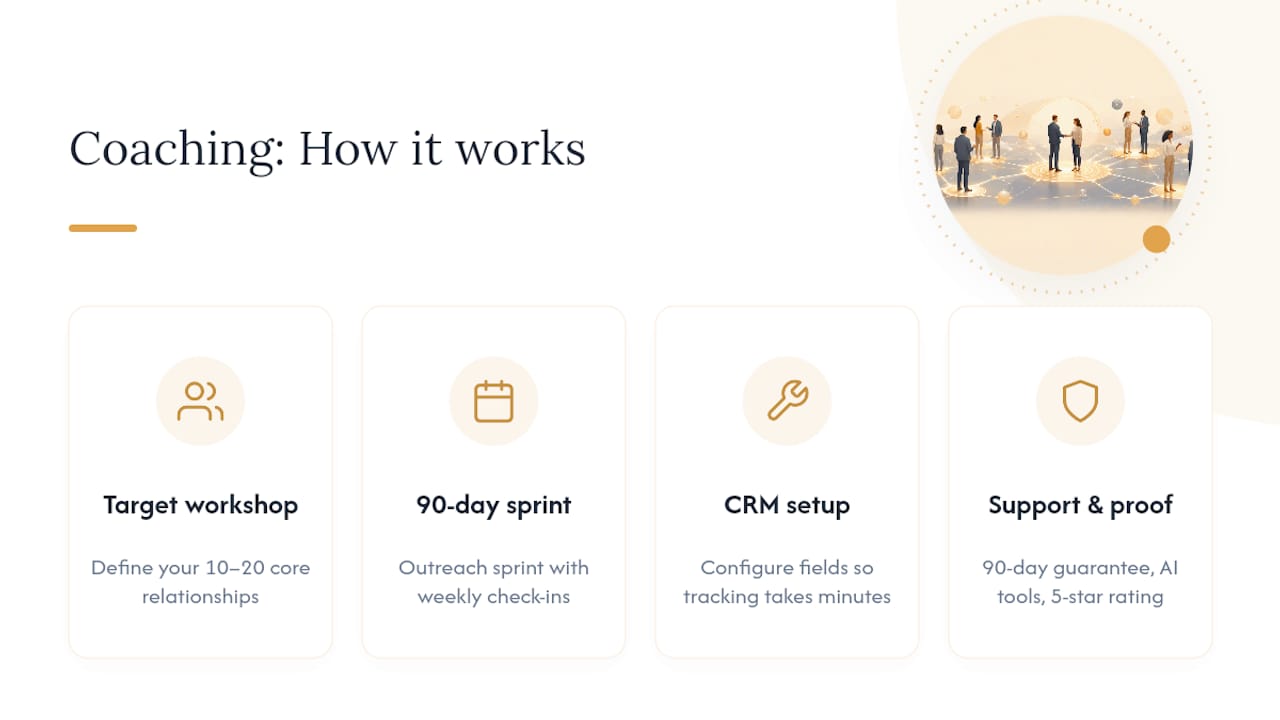
Most business owners know the tactics above intellectually and still never execute them consistently. That gap between knowing and doing is where coaching earns its keep. Duncan and the Champion Business Coaching team work with clients to turn this framework into a real weekly habit: building the target list in a working session, setting up the CRM fields, and holding the accountability that makes the 24 to 48 hour follow-up rule stick past week two.
Champion runs this through a few concrete workflows: a target-list workshop to define your 10 to 20 core relationships, a 90-day outreach sprint with weekly check-ins, and a CRM setup session so tracking takes minutes, not hours. Backed by a 90-day coaching guarantee, limited coaching slots to keep the work personal, AI-assisted tools for faster follow-up drafting, and a 5-star Google rating, it is built around one idea: strategy without follow-through is just a good idea nobody acted on.
What most business owners get wrong about networking
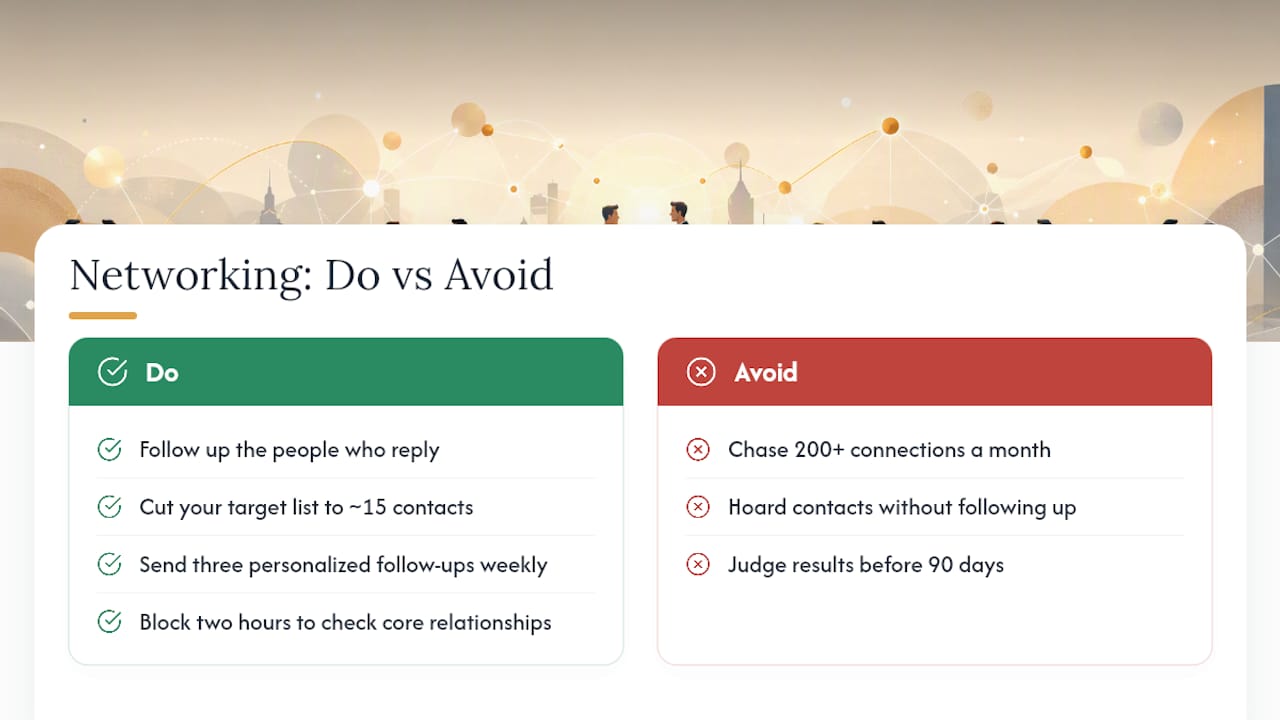
The biggest mistake I see is treating networking like a numbers game, chasing 200 LinkedIn connections a month instead of following up properly with the five people who actually replied. One client spent a year collecting contacts before realizing she had never followed up with a single one past the first message. She cut her list to 15 people, sent three personalized follow-ups a week, and had two paying referrals inside two months.
Your 7-day starter plan: build your target list, send three personalized follow-ups this week, join one curated community, and block two hours to check in with your core relationships. Give it 90 days before you judge the results.
— Duncan
Ready to put a real networking system in place?
Reading a framework is one thing. Running it every week for 90 days while juggling clients, staff, and everything else on your plate is another. Champion Business Coaching exists for that gap, working alongside Australian business owners to build the target list, set up the CRM habit, and hold the follow-up discipline that most people abandon by week three.
The coaching includes a target-list workshop, ready-to-use follow-up templates, AI-assisted outreach drafting, and the accountability check-ins that keep the system running past the first burst of motivation. It comes backed by a 90-day guarantee: if you do not see results, that coaching session is free. Slots stay deliberately limited to keep the coaching hands-on, and the 5-star Google rating reflects clients who have gone through exactly this process. If you run a trades or service-based business, there is industry-specific coaching built around how those referral networks actually work.
Request a consultation through Champion's coaching page and get your target list and follow-up system built out in the first session.
Sources
- Relationships win in business: here's how to build them in the AI era — Forbes
- Turn negotiations into enduring strategic partnerships — HBS Online Blog
- Networking in business — Business Queensland
- Business networking strategy that actually closes deals — Alex Berman