
A business coach for builders is a specialist advisor who helps construction business owners fix profit leaks, build leadership systems, and run operations that do not depend on the owner being present for every decision. Most builders are exceptional tradespeople who become business owners by default, not by design. That gap between field skill and business skill is exactly where a construction business coach operates. Championbusinesscoaching works with Australian builders to close that gap through personalized coaching, diagnostic assessments, and clear action plans built around your numbers, your team, and your goals.
How does a business coach for builders improve your results?
A construction business coach produces measurable results by targeting the three areas that drain builder profits most: pricing, leadership, and operational systems. Generic business advice fails builders because it ignores the realities of subcontractor relationships, project margin pressure, and the cash flow gaps between progress claims. Field-aware coaching addresses all three directly.
The profit gains start with pricing. Coaches help builders develop accurate pricing models that account for labor, materials, travel, and scope changes on every job. Most builders undercharge because their estimates do not capture true overhead. Fixing that one system often produces the fastest margin improvement.
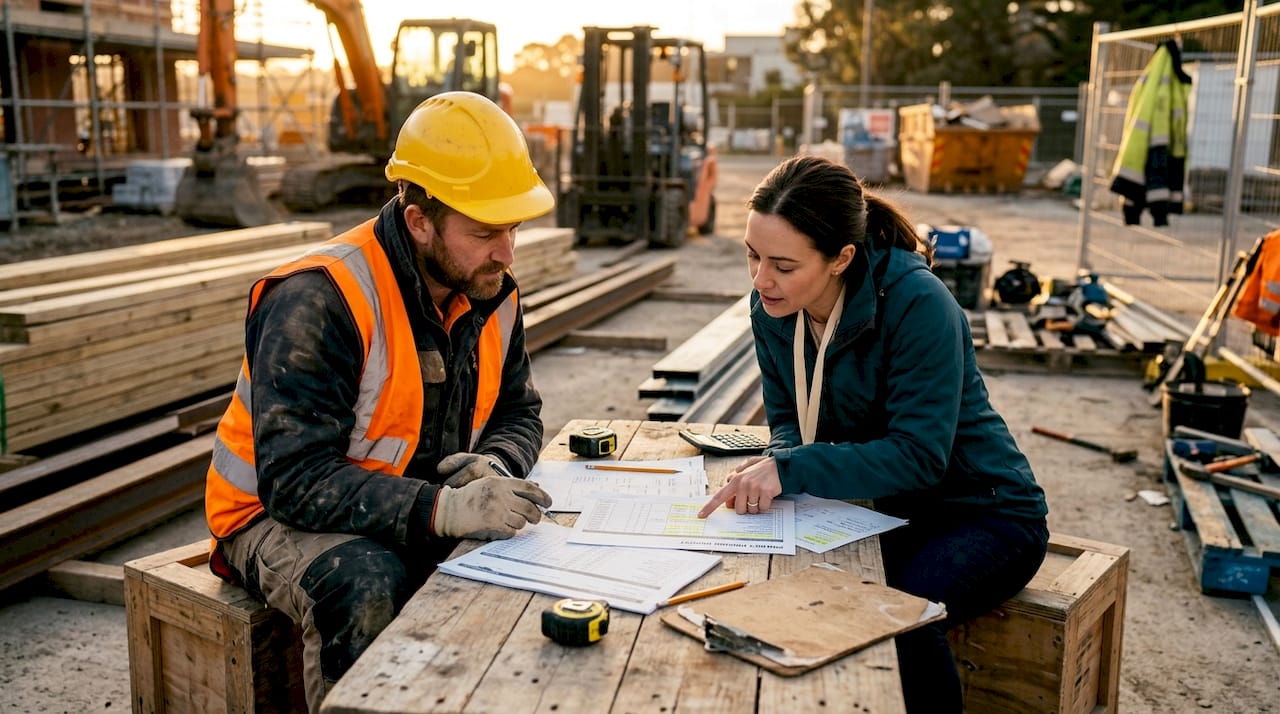
Leadership development is the second lever. Builders often fall into a trap described precisely in construction coaching circles: they become too valuable to promote and then too tired to stay. The answer is building leadership muscle, which means training your team to make decisions without you on every call. That shift is what gives owners their time back.
Operational systems are the third lever. Standardizing job costing, work-in-progress (WIP) tracking, and hiring checklists produces lasting improvements that pricing fixes alone cannot. Builders who implement these systems report early clarity and time savings within the first month, with profits deepening as the systems mature.
Pro Tip: Track your gross margin per job for three consecutive months before your first coaching session. That single data set tells a coach more about your business than an hour of conversation.
Key outcomes builders achieve through construction business coaching include:
- Margin protection on every project through accurate job costing
- Reduced owner dependency through team leadership development
- Faster hiring decisions using structured onboarding checklists
- Predictable cash flow through WIP schedule management
- More personal time as systems replace owner-driven decisions
What makes an effective construction business coach?
The most effective construction business coaches are field-aware. That means they understand how a variation order affects a margin, why subcontractor scheduling creates cash flow gaps, and how a builder's day actually runs. A coach without that context gives advice that sounds right in a boardroom and fails on a job site.
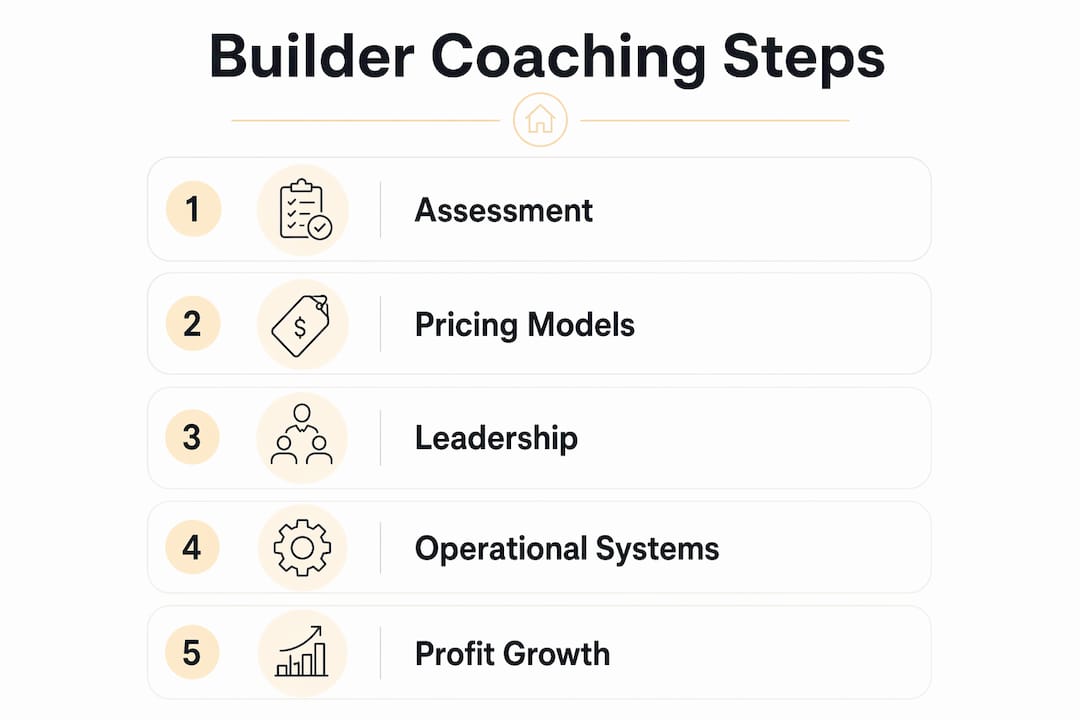
Effective programs use diagnostic tools early. BIZ-Evaluation assessments deployed in the first two to four weeks identify profit-drainers before any coaching plan is built. That diagnostic step separates field-aware coaching from generic business advice. It also means the coaching plan is built around your actual numbers, not a template.
The focus stays on operational systems, not just high-level strategy. Strategy without systems is a wish list. A construction leadership coach who helps you build a job costing template, a hiring checklist, and a weekly WIP review process gives you tools that work when you are not in the room. That is the difference between coaching that feels good and coaching that changes your business.
Pro Tip: Ask any coach you consider this question: "Have you worked directly with builders managing subcontractors and progress claims?" The answer tells you immediately whether their advice will translate to your site.
The features that distinguish effective builder coaching services include:
- On-site or virtual support that fits around project schedules
- Diagnostic tools to identify profit leaks in the first month
- Subcontractor relationship and margin pressure expertise
- Pricing model development for labor, materials, and scope changes
- Regular accountability sessions with tailored action plans
How should you prepare to get the most from coaching?
Preparation determines how fast coaching produces results. Builders who arrive at their first session with key financial data allow their coach to identify profit leakages quickly and focus the engagement on the right problems from day one.
Gather these items before your first session:
- WIP schedule. Your current work-in-progress schedule shows how much revenue is locked in projects and where cash flow gaps are forming.
- Overhead percentage. Calculate your overhead as a percentage of revenue. Most builders discover this number is higher than they assumed.
- Gross margin per job. Pull the last three to six completed jobs and calculate actual gross margin versus estimated margin. The gap is where coaching starts.
- Subcontractor cost breakdown. List your top five subcontractors and what percentage of project cost they represent. This reveals pricing risk.
- Team structure. Document who does what and which decisions currently require your direct involvement. This is the baseline for leadership development.
Owners prepared with this financial data allow coaches to skip the discovery phase and move directly into solutions. That preparation can compress weeks of coaching into days of focused action.
Set clear goals before you start. Decide whether your priority is profit improvement, operational systems, leadership development, or personal time freedom. Not all builders want rapid growth. Many prioritize simplification and stabilization to create predictable margins and reduce stress. Both are valid goals, and a good coach will build your plan around whichever you choose.
What do construction business coaching programs look like?
Coaching programs for builders follow a structured progression. The phases differ by provider, but the most effective programs move through assessment, blueprint planning, and implementation in a defined sequence.
| Phase | Focus | Typical Format |
|---|---|---|
| Assessment | Diagnostic review of financials, systems, and team | Initial calls, BIZ-Evaluation tool, data review |
| Blueprint | Goal setting, priority ranking, and action plan creation | One-on-one sessions, written plan delivery |
| Implementation | System builds, leadership training, pricing model setup | Weekly or fortnightly coaching sessions |
| Accountability | Progress reviews, course corrections, and peer learning | Monthly Zoom calls, mastermind groups |
Monthly Zoom calls, peer masterminds, and unlimited email support are common features in well-structured programs. Peer mastermind groups are particularly valuable because they connect builders facing similar challenges. Hearing how another builder solved a subcontractor pricing problem is often more useful than a theoretical framework.
System templates are a core deliverable. Effective programs provide ready-to-use templates for scheduling, hiring, pricing, and team management. These are not generic documents. They are built around construction workflows and adapted to your business size and trade type.
The best programs also balance growth with simplification. A business mentor for builders who only pushes revenue growth without addressing operational stress creates a bigger, more exhausting business. The goal is a business that is profitable, predictable, and less dependent on the owner's constant presence.
Key Takeaways
Operational coaching built around construction-specific systems produces more lasting profit improvement than high-level strategy alone.
| Point | Details |
|---|---|
| Field-aware coaching matters | Coaches with construction knowledge address subcontractor margins and progress claims directly. |
| Diagnostic tools accelerate results | BIZ-Evaluation assessments in the first month identify profit-drainers before the plan is built. |
| Prepare financial data first | Bring WIP schedules, overhead percentages, and job margins to maximize your first session. |
| Leadership development frees owners | Building team decision-making reduces owner dependency and restores personal time. |
| Simplification is a valid goal | Not every builder needs rapid growth; predictable margins and less stress are legitimate targets. |
Why operational coaching beats strategy every time
I have worked with enough construction business owners to know that the ones who struggle most are not lacking ambition. They are lacking systems. The builder running $3 million in revenue who cannot take a week off is not a growth problem. It is a systems problem. Every time I see a coaching program that leads with vision boards and revenue targets before fixing job costing and hiring processes, I know the owner will be back in the same position in 12 months.
The uncomfortable truth about construction business coaching is that the granular work is the transformative work. Fixing how you cost a job, how you onboard a subcontractor, and how your site supervisor makes decisions without calling you first. Those changes compound. A builder who implements a proper WIP review process does not just save time. They catch margin erosion before it becomes a loss.
I also think the industry undervalues simplification as a goal. Not every builder wants to run a $10 million operation. Some want a $2 million business that runs without them for two weeks while they take their family to Queensland. That is a completely legitimate outcome, and a good construction leadership coach will build a plan around it without judgment.
The coaches who produce real results are the ones who have stood on a job site, dealt with a subcontractor who did not show up, and understood what a variation order does to a cash flow forecast. If your coach has never managed a project, their advice will always have a gap in it.
— Duncan
Championbusinesscoaching's programs for Australian builders
Championbusinesscoaching works with Australian construction business owners who are ready to fix the systems holding their profit back.

The process starts with a free discovery call where you share your current challenges and Championbusinesscoaching assesses whether the fit is right. There is no pressure and no generic pitch. From there, a diagnostic assessment identifies your specific profit leaks and operational gaps. Every coaching plan is built around your numbers, your team size, and your goals, whether that is margin improvement, leadership development, or getting your weekends back. Championbusinesscoaching backs every engagement with a 90-day guarantee: results or your session is free. Builders across Australia have rated the service five stars on Google. Book your free call and find out what a tailored plan looks like for your business.
FAQ
What does a business coach for builders actually do?
A business coach for builders helps construction business owners fix pricing, build operational systems, and develop team leadership so the business runs without constant owner involvement. The focus is on measurable outcomes like margin improvement and time savings.
How quickly can coaching improve construction business profits?
Builders who arrive prepared with financial data often see clarity and time savings within the first month. Profit improvements deepen as systems like job costing and WIP tracking are fully implemented.
What financial data should I bring to my first coaching session?
Bring your WIP schedule, overhead percentage, gross margin per job for recent projects, and your subcontractor cost breakdown. Prepared financial data allows the coach to identify profit leaks immediately rather than spending sessions on discovery.
Is construction business coaching only for builders who want to grow?
No. Many builders prioritize simplification and stabilization over growth. A good construction business coach builds a plan around your actual goals, whether that is a larger operation or a more predictable, less stressful business at your current size.
How is a construction business coach different from a general business coach?
A construction business coach understands subcontractor relationships, progress claims, WIP schedules, and project margin pressure. General business coaches lack that context, which means their advice often does not translate to the realities of running a building business.